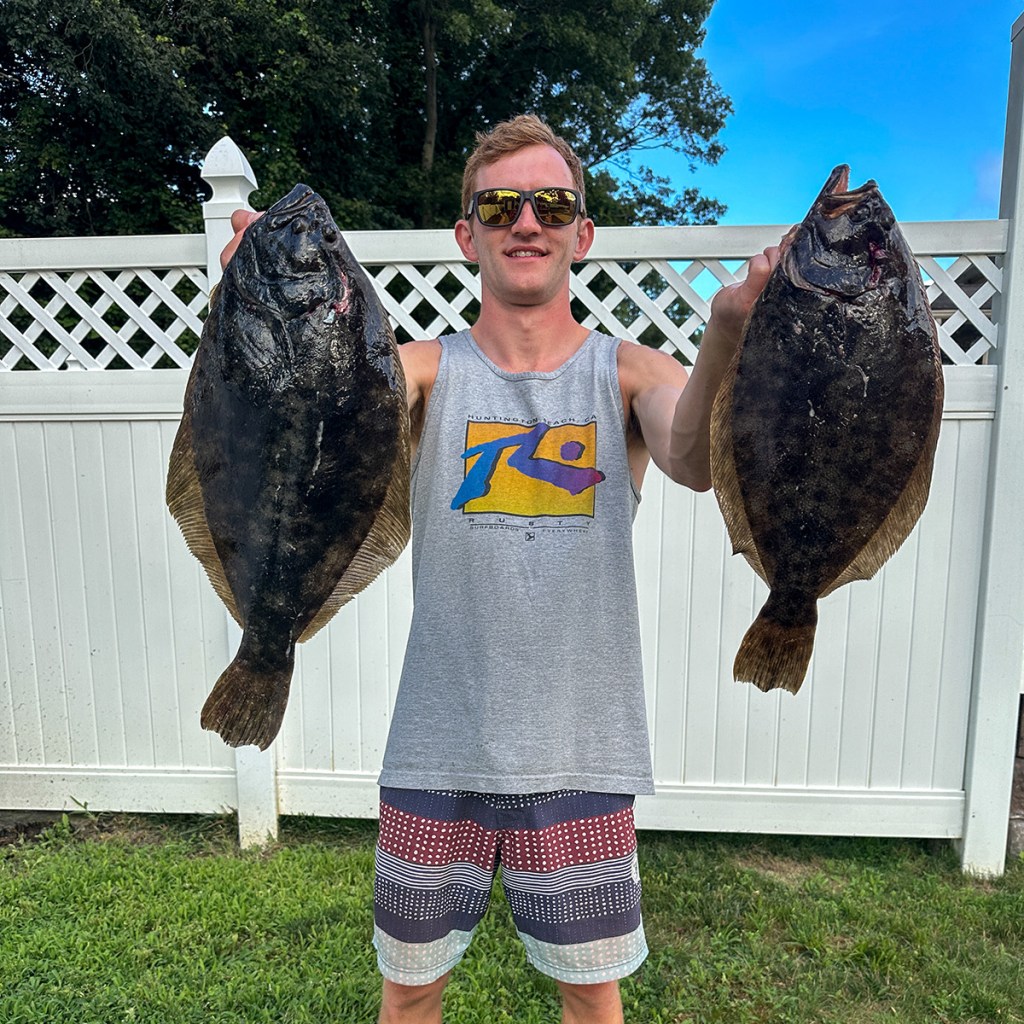
I’ve been freshwater fishing for a few years now, but I never really got into saltwater fishing.
When I first started learning bass fishing, I was overwhelmed—so many techniques, and so many things to think about. Focusing on one type of fishing was enough at the time.
This summer, I felt like the time was right to explore saltwater fishing. I picked up some used rods and tackle locally, and starting learning everything I could about catching fluke.
There’s good fluke fishing in New Jersey
Does that surprise you? In fact, NJ’s coastal and inshore waters have excellent fishing for many different species.
To keep it simple, I chose to focus on one species: summer flounder (also known as fluke). It’s one of my favorite fish to eat, and it’s abundant here.
So, I scoured the internet and spoke to some local gurus to figure out how to do it. Everyone seemed to suggest the same thing: white bucktails and Gulp.
I learned how to rig it, and Caitlin and I started surf fishing for fluke.
You have to know where to look
As with any type of fishing, you have to figure out where the fish actually are—otherwise, it doesn’t matter what you use as bait.
We quickly learned that in surf fishing, it’s hit or miss. But to maximize the odds, it helps to look for sandbars with a deep trough between them and the shoreline .
We got skunked on our first few outings, but we learned. Then, one day in late June, we finally cracked it!

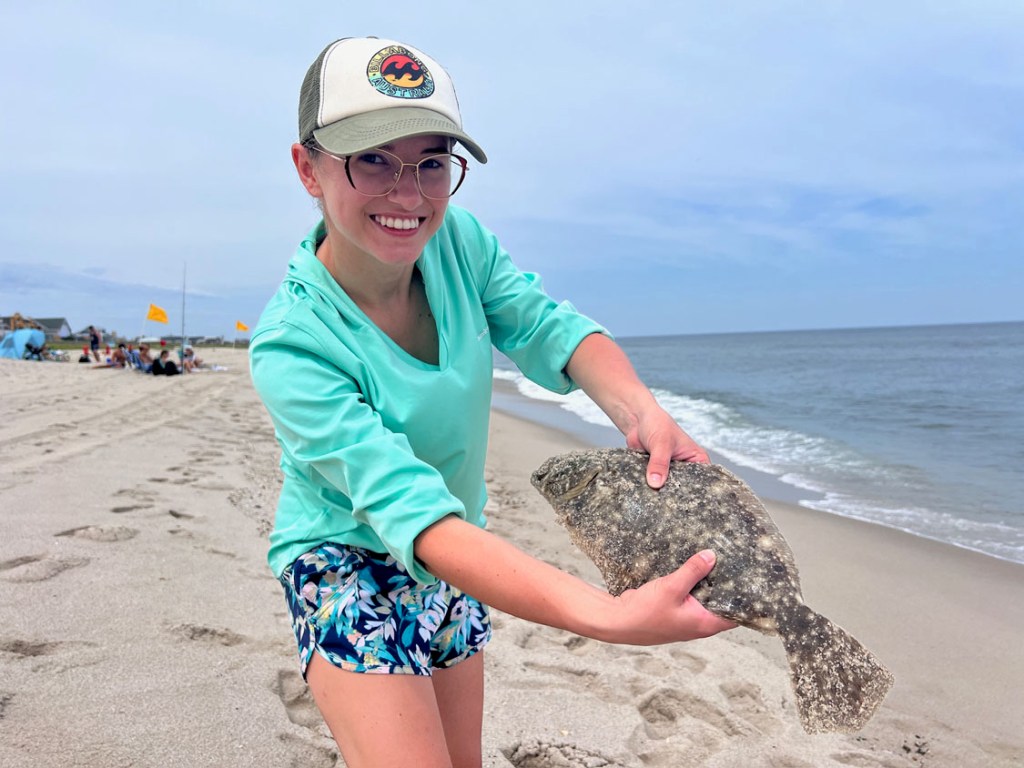
Honestly, we weren’t expecting much on this day, so to each get a decent flounder right off the beach was incredible.
But that was just the start.
Sometimes it all comes together
And that’s exactly what happened when I caught my first limit of the summer.
We went out to Island Beach State Park early one Saturday with friends, looking forward to a relaxed beach day with maybe a little bit of fishing.
The south end of the island just reopened, so we all agreed to go check out the view and then find a spot on the beach. But we couldn’t resist taking a few casts.
We grabbed our rods and started casting from the rocks into the inlet. I casted up current with a light bucktail and jigged it along the bottom—and it didn’t take long to get a bite.

On my first cast, I landed a 19-inch fluke! That’s keeper size, so I put it on ice right away.
I went back to casting and got another within two casts, but it was slightly short. A few casts later, I got a 17-incher—another keeper!
I couldn’t believe it. After weeks of getting skunked, I got three fish and two keepers in under a half hour.
Meanwhile, Caitlin was crushing it too. She landed a big bluefish, but we couldn’t control it on the rocks and it got away.
A few casts later, she hooked something massive—the strike was so violent it nearly pulled her in the water! The drag screamed for mercy as the fish started ripping line off the reel, but a few seconds later, the line went light.
We think it was probably a shark…
Catch, clean, and cook
Catching the fish is just the first step. I never filleted a fluke before, so I spent a few minutes on YouTube to get the idea.
This video from Salt Strong has some great tips.

Considering it was my first attempt, I think I did pretty well. Cutting as close to the ribs as possible helps to ensure you don’t miss any meat. And with two fillets on each side of the fish, I had a lot of practice by my last fillet.
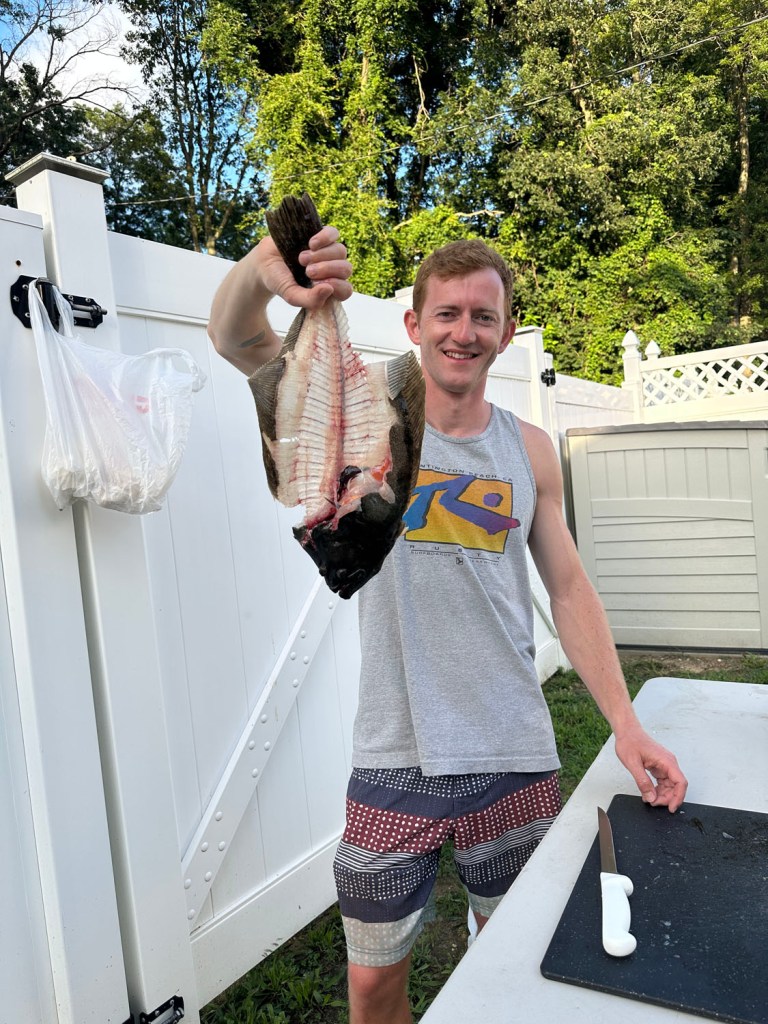
Caitlin, on the other hand, has much more experience filleting fish than I do. She took one look at the video and carved out four super clean fillets—nothing wasted.

We got eight nice fillets from these fish, and we put them on ice to cook the next day.
Grilled flounder recipe
When it was time to cook, we decided to grill the flounder in foil packets with a bunch of sliced lemon and fresh herbs.
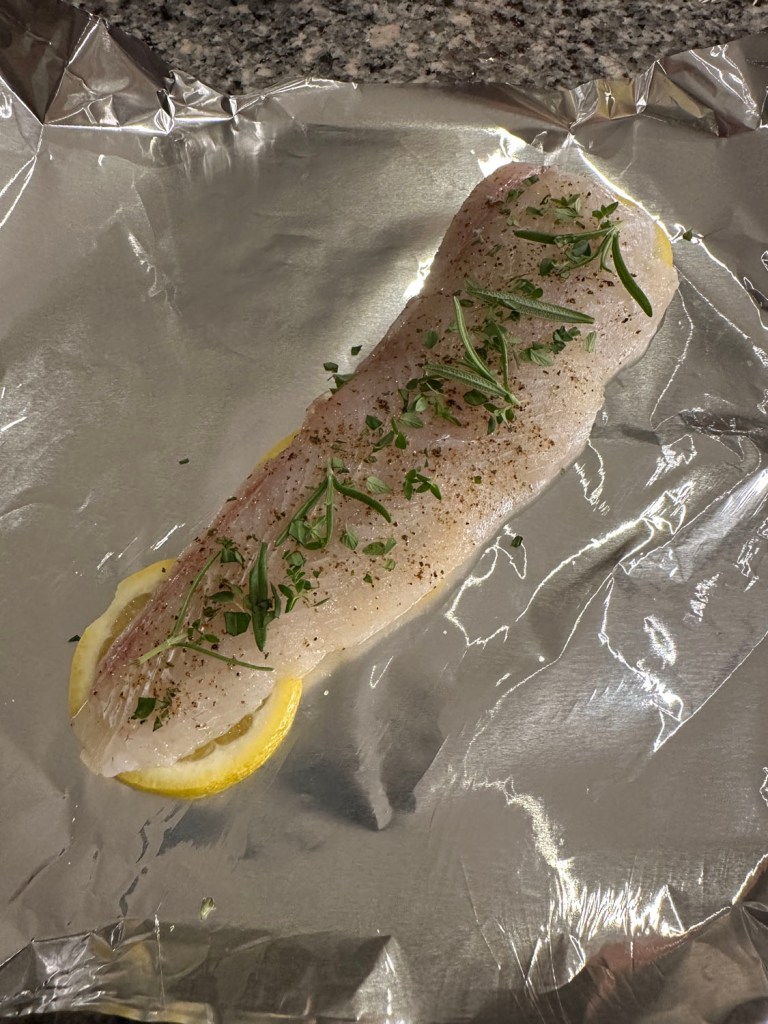
Here’s the recipe we used:
- Pat the fillets dry with paper towels.
- Brush each fillet with olive oil on both sides, and season lightly with salt and pepper.
- Place each fillet on a 12-inch piece of foil, with 3–4 lemon slices underneath the fillet.
- Place fresh herbs on top of the fillet (we used thyme, rosemary, and oregano from our garden).
- Top the fillet with 2–3 more lemon slices and wrap the foil around it snugly.
- Grill on medium-high heat for 3 minutes on the first side, then 2 minutes on the second side (large fillets may need more time, but start here to avoid overcooking).
- Pull the fillets off the grill and check the temperature with a meat thermometer—the fillets should be 140°F.
If the fillets are not quite to temperature, put them back on the grill. Just be careful and watch closely because you don’t want to overcook them.
Ours came out perfectly! It was an incredible feeling to cook and eat something that I just caught. The fish was so fresh, and it was absolutely delicious!

 Alternate Rush
Leave a comment