
I’m the kind of person who thrives in nature. I find that it’s the one place I can truly rest and recharge. Unfortunately, life often gets in the way. That’s why this trip was so important.
It had been a couple years since Caitlin and I had an opportunity to return to this gorgeous Adirondack lake. A lot happened in that time, and we were itching to get back into the wilderness for some much-needed disconnection.
It was late August, a hot time of year in most places. However, being so far north in the Adirondack Park, that wasn’t really the case. Forecasts predicted highs barely touching 75° Fahrenheit, and lows down to 48°F on the coldest nights. They also called for a few days of rain to start the trip.
This lake is one of the biggest in the Adirondacks and more than 80 percent of the shoreline is wilderness. We planned for six days of primitive camping in one of the most remote areas. There would be no easy way in or out, and no way to get help quickly.
It’s not a trip to do lightly, but we had been planning it for nearly eight months. We packed accordingly, preparing ourselves to survive a few days of rain and cold, and hit the road.
The Trip
Day 1 – Tuesday
We left our house just before 5 am on August 20th, ready for a six-hour drive into the North Country and five nights in the wilderness.
The drive was smooth, and after about four hours we exited the highway. The final leg of the journey was about two hours of windy mountain roads, and I was loving it (Caitlin, not so much).

As always seems to happen, the rain began to fall as we continued northward. It poured on and off for that two-hour stretch, but by the time we reached the boat launch it had turned into a light drizzle. We got to work right away, unloading the kayaks and packing every compartment full with food and gear.
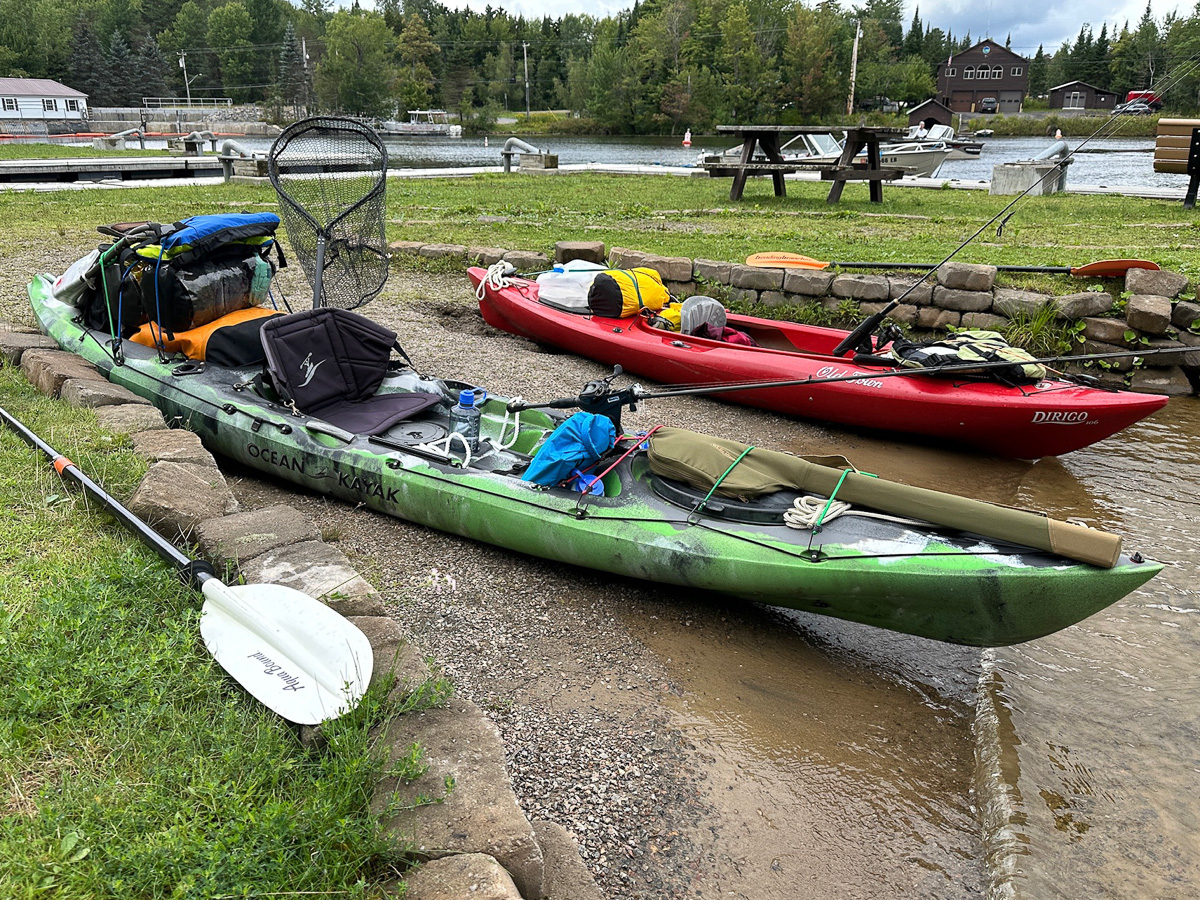
We hit the water around 2:30 pm. Miraculously, the weather cleared and the sun poked through! A light tailwind pushed us deeper into the wilderness and after about 1.5 hours on the water, we arrived at camp—nearly 30 minutes faster than normal!
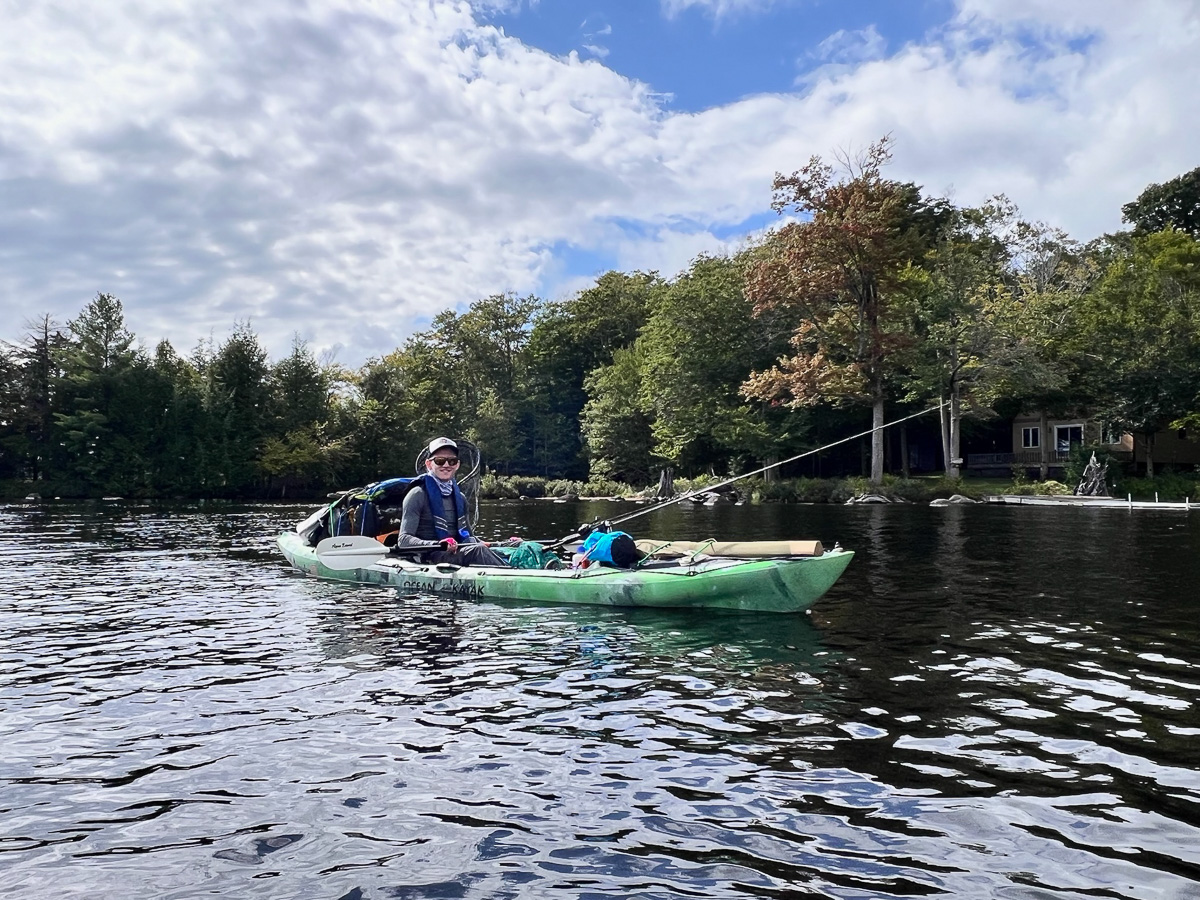
We were stoked for our good fortune, but there was no time to rest. The skies looked ominous all around us, and we knew more rain was a likely possibility. We set up a tarp lean-to immediately and proceeded to stack everything under it until the weather dried out.
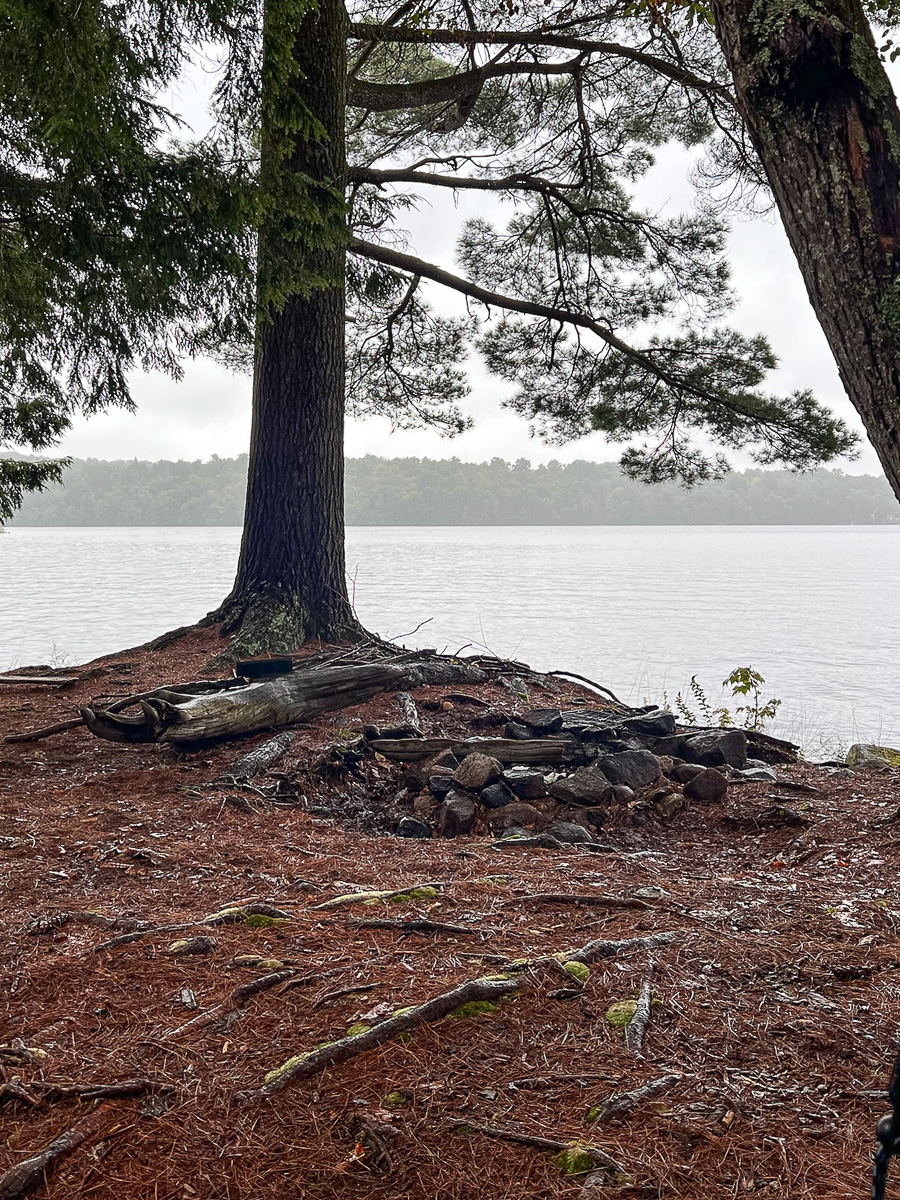
We passed the time by collecting firewood. During the next lull in the rain, we set up our tent then tried to start a fire. Everything was waterlogged after nearly a week of rain, but with a combination of paper, fire starter, and patience, I got the fire going in just a couple of minutes.
We ate a delicious dinner of freeze-dried Pad Thai with chicken and went to bed early. It was one of the coldest nights of the trip (about 48°F) but we were warm and dry in our tent, huddled together with several down blankets.
Day 2 – Wednesday
We checked the weather before leaving civilization, so we knew that rain was expected much of this day. That turned out to be somewhat accurate—we awoke in the night to a downpour, but it was deceptively calm by morning.
We struggled to leave the tent due to the cold, damp conditions, but eventually, we forced ourselves out. We wanted to take advantage of the break in the weather so we quickly prepared our boats to go fishing.
Just as we were ready, the skies opened up again.
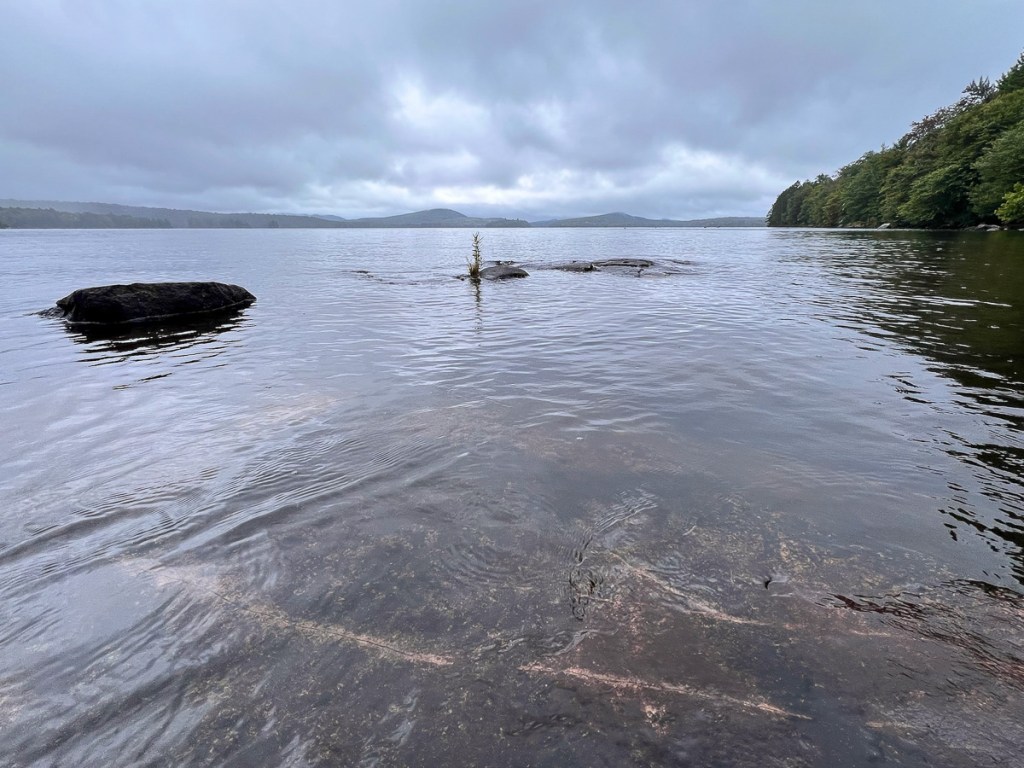
It was around 11 am. We waited for nearly an hour but the rain didn’t let up, so we decided to scrap our fishing plans and focus on survival. That meant it was time for breakfast!
I boiled some water and prepared instant oatmeal, mixing it with peanut butter, protein powder, apples, and peanuts for maximum calories and nutrition. We huddled under our lean-to and ate to the steady sound of the rain falling around us.
I was hungry and looking down, totally focused on my warm bowl of oatmeal. Luckily, Caitlin was birdwatching and more aware of our surroundings, because as we ate, something was getting closer.
“Babe, there’s a bear swimming across the lake straight for us,” she said, instantly bringing me back to reality. “No way,” I said. It was so unexpected I wasn’t sure what to say.

Caitlin was right. A juvenile black bear was about a football field away, swimming across the lake and making a beeline for our camp. We were in complete awe as we watched it steadily doggy-paddle its way closer. Then it hit me—this bear was going to come ashore in our camp.
My instincts kicked in at that moment.
I went to the tallest part of the shoreline in front of camp, stood tall and opened my jacket to make myself look larger. The bear looked directly at me, turned sharply to our left, and kept swimming. A few minutes later, it came ashore about 30 yards from us and disappeared into the woods.
At that point, we made a bunch of loud noise with our pots and firewood for at least a minute. We realized that the bear probably smelled our oatmeal from across the lake—about 200 yards away—and came looking for food, so we made sure to pack all the food into our bear bag.
We were both incredibly calm while this was happening, partially out of pure amazement, but also because we knew what to do in a bear encounter. We agreed this was definitely one of our coolest wildlife sightings, but it was also a wakeup call to be extra careful with the food.
After things settled down, it was back to survival. We had planned to gather firewood after breakfast and got right back into it once we were confident our bear friend was gone.
Caitlin went to gather the first round of wood as I began building the fire. Everything was still wet, so I would need all the tricks in the book to make sure we got a flame.
I used the lean to fire technique: one large piece of wood across the center of the fire pit with kindling leaned against it on one side and some highly flammable stuff under the kindling.
For the base, I used paper and birch bark (works well even when wet). Next, I layered fatwood against the large log with a piece of fire starter mixed in, then covered that in lots of kindling. Finally, I lit the base and watched it go.
It worked! The wet kindling dried as the fatwood caught, then the kindling caught too. I gradually added wood and kept a steady rotation of wet pieces around the fire pit to dry out.

Caitlin returned a few minutes later which meant it was my turn to collect wood. I took my kayak down the shoreline and spotted a large collection of driftwood. Thankfully, it was easy to collect from the shore.
Unfortunately, as I was loading my boat, I slipped on a log and fell in the water up to my stomach. I knew being wet could quickly become serious with the cold weather and fading daylight, but I was ok.
I got back to camp, unloaded my boat, and stripped out of my wet layers. The fire was going strong and it was truly a lifesaver in this situation. I dried off then put on my other set of clothes.
Our attention turned to dinner. We decided to cook one of our camp classics: a mix of spam, onions, couscous, and black beans with spices and hot sauce. Caitlin volunteered to cook while I made sure the fire stayed alive.
As dinner progressed and the light faded, the rain picked up once again. I tended the fire constantly to keep it going and strategically arranged a teepee of larger pieces to protect the coals from falling water. It worked surprisingly well—our fire never went out.
Caitlin was soaked through after an hour of cooking in the rain and was happy to share in my success. We quickly made burritos and sat by the fire, wet but happy to be eating a warm meal.
Thankfully, the rain soon passed. We built the fire larger and huddled around it, steam billowing off our clothes as they dried out.
We spent at least an hour warming ourselves and holding our wet layers over the fire, then turned in for the night, hopeful that tomorrow would be our first dry day.
Day 3 – Thursday
We were up just after dawn and things looked promising!
The sky still looked ominous, but bits of sun were poking through and the forest had already started to dry. We took that as a good sign and got ready for our first full day on the water.
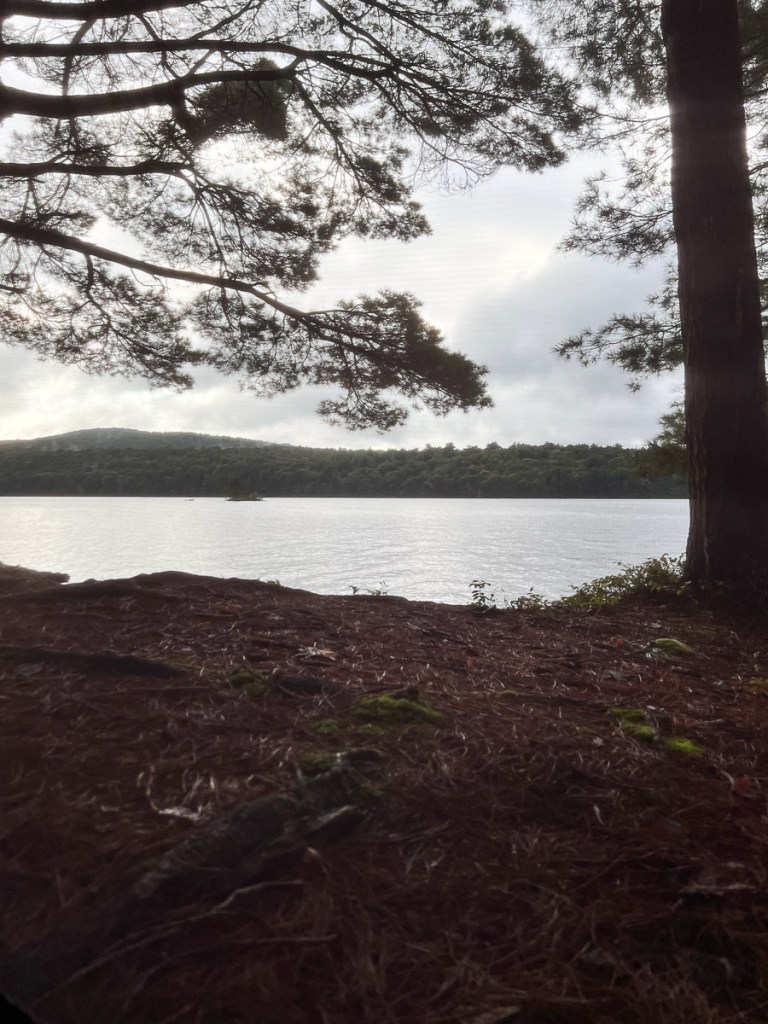
It was chilly as we prepared, and the day’s high wasn’t expected to top 60°F, so we dressed in layers and brought extras. We packed plenty of snacks, MREs for a shore lunch, water bottles and filters, a surplus of fishing gear, and some sunscreen (I was being optimistic).
We paddled out of camp just before 10 am and headed east down the arm of the lake. I had my mind set on fishing a specific location, and after just 15 minutes of paddling we were in the perfect spot.
I didn’t know what was under the water, but I had seen people catch fish here over the years. My Garmin Striker 4 fish finder confirmed the reasons why: it was an area about 6–8 feet deep with healthy vegetation on the bottom.
It was also situated between several small islands, the continued arm of the lake, and the rocky lakeshore, making it an intersection that fish had to pass through to move between these areas.
I dropped anchor and started casting as Caitlin positioned herself and did the same. I had taken maybe three casts as Caitlin took her first—almost immediately, she had a fish on the line!
After a lively fight, she landed the first fish of the trip! It was a smallmouth bass, about 14 inches long with vibrant colors and vertical stripes along its body. I paddled over and we looked at each other in disbelief.

14″ Smallmouth Bass
Caught by Caitlin on August 22, 2024
Equipment:
- Bass Pro Micro Lite Graphite 6’6″ (medium light power, fast action)
- 8 lb Suffix braid, 8 lb fluoro leader
- 3/0 EWG hook
- Z-Man Trick ShotZ (The Deal, 4.2″)
- 1/4 oz tungsten bullet weight
I guess the fish was hungry because it had inhaled the bait and was hooked deeply in the tongue. I cut the line and after about 10 minutes of wrangling I was able to pull the hook through by the point.
This was the biggest fish either of us had ever caught at this lake, and Caitlin got it on her first cast! It was an incredible way to shake off a few days of cold rain and a much-needed morale boost.
It was also the first of many fish caught this trip using the drop shot rig, but rather than retie it, I gave Caitlin my extra spinning rod (with a Texas-rigged plastic crawfish) and we continued to fish in this area a while longer.
We moved around, trying a few different spots, but there was very little action (other than a few small fish taking my bait and spitting the hook). After about an hour, we decided it was time for lunch.
We paddled over to one of our favorite spots: a small, rocky island covered by a few trees and a lot of moss. The island has no name on any maps, so we just called it Rock Island (creative, I know).

Lunch consisted of a couple military MREs—in my opinion, one of the best adventure meals. I had the pepperoni pizza while Caitlin had the veggie taco sauce.
The pepperoni pizza MRE is legendary and highly sought after, sometimes selling for $30+ individually on eBay (don’t worry, I didn’t pay that much). It came in a mixed box, so I guess we got lucky!
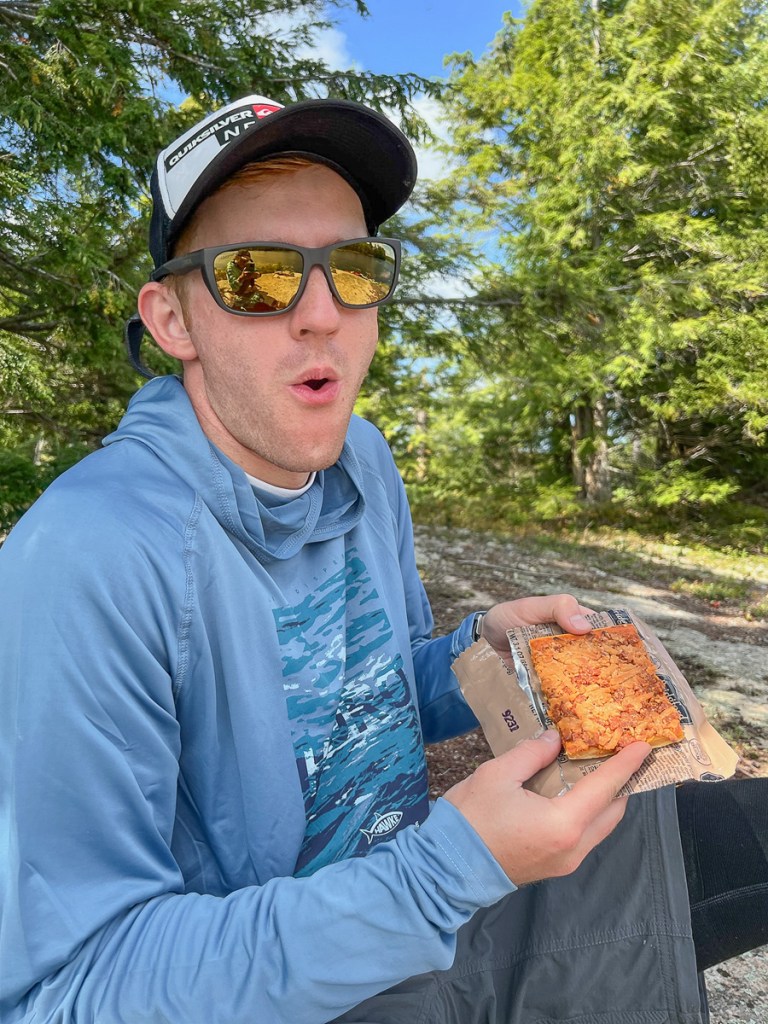
I promise this isn’t a food blog, but I have to say, the pizza was good! There were some other tasty snacks and desserts in the MRE as well. I can see why it’s desirable, but overall it wasn’t enough food for me. Luckily, Caitlin was kind enough to share some of her rations.

We relaxed there in the sun for a while. I retied Caitlin’s rod with a Texas rig and curly tail worm, then took a few casts of my own using a topwater frog. I got no bites, so we decided to hit the water.
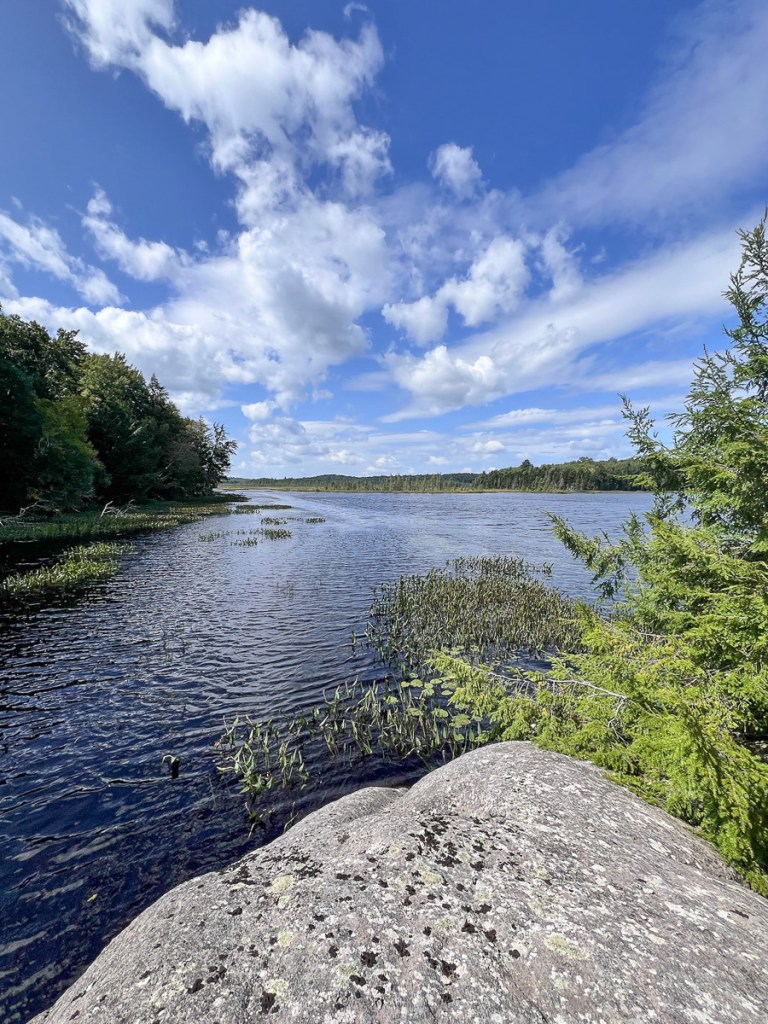
We went back to the area where Caitlin caught the smallmouth in the morning, but neither of us had any luck. We headed back to camp around 4:30 pm in the glorious afternoon sun, fishing as we went.
Once back at camp, the first order of business was firewood collection (we had totally depleted our stock during the previous rainy night). We split up to cover more ground, kayaking down opposite banks and picking up pieces from shore.
We were all done by around 7 pm. It was still sunny but clouds were moving in, so we quickly paddled out to a large, sandy flat in the center of the lake to swim and wash off. The wind was cold but we didn’t care. As we swam, a rainbow appeared!
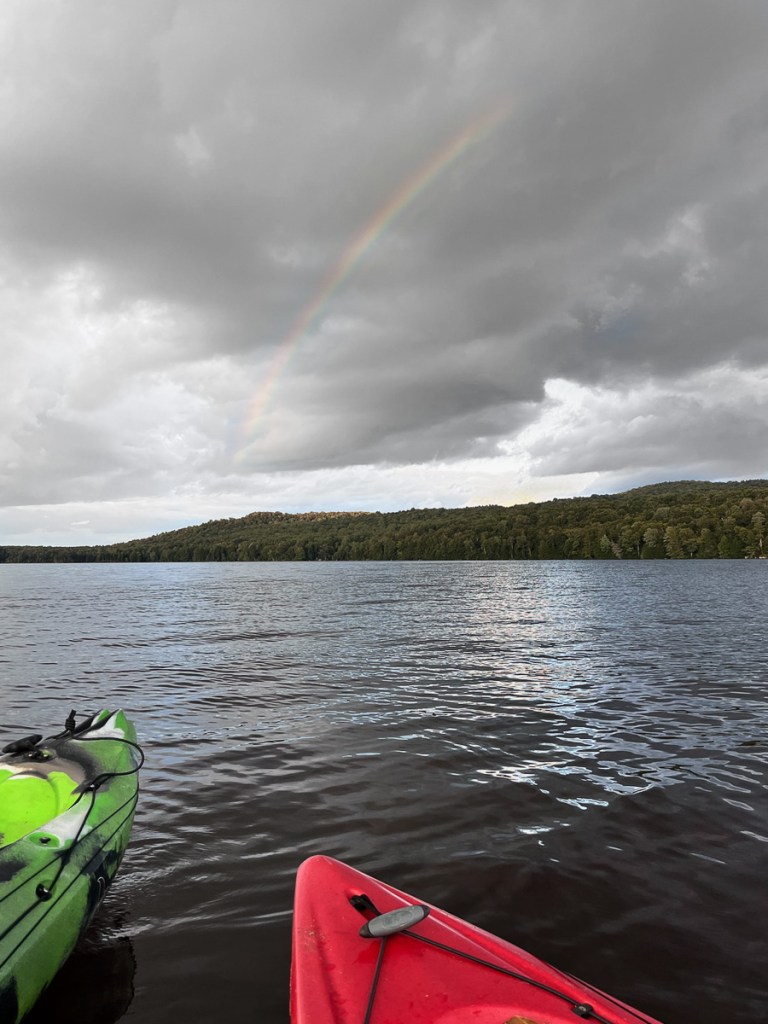
It was such an incredible moment after everything we had experienced over the last few days, but it only lasted about a minute before the rain started. We hurried back to camp, started a fire, and dried off.
Thankfully, the rain didn’t last long and by dinner time, it was calm and dry. We made burritos from our leftovers, put the food in the bear bag, and were in the tent by midnight.
Day 4 – Friday
We awoke around 7 am to beautiful sun shining through the trees—great motivation to get out of the tent!
We ate a light breakfast and got right to work loading our boats for another day on the water. We left camp at about 9 am and again headed east down the arm of the lake.

As we paddled, I noticed on the fish finder that the area just east of camp had some rocky structure on the bottom—prime smallmouth habitat—so I couldn’t resist taking a few casts.
I casted up wind with the drop shot and let myself drift down the bank. It didn’t take long to get a fish on the line, but it spit the hook on a jump!
Thankfully, after a few more casts I got another, about an 8-inch smallmouth. I was stoked to get my first fish of the trip! I let it go quickly without taking a photo and we continued paddling.
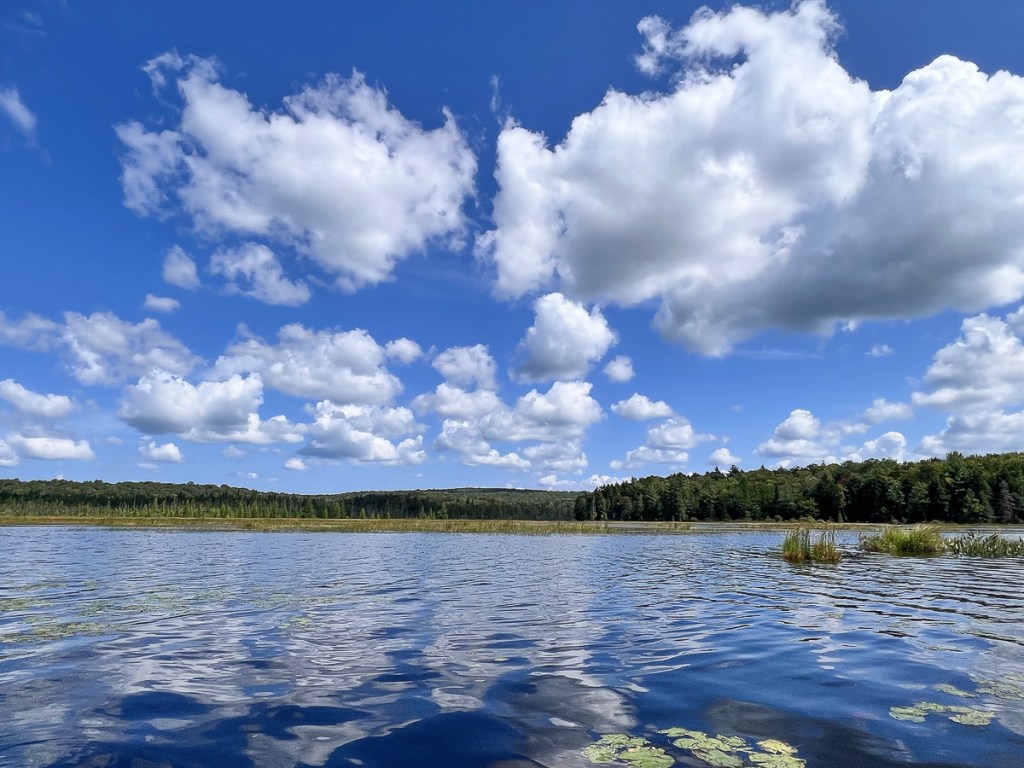
We headed deep into the grassy shallows behind Rock Island. This area is covered in heavy grass and other vegetation, and there’s only one channel to get through.
I thought there might be some pike around since they love grass, so I tied on a heavy 40lb leader and started casting a topwater frog.
After a while, I switched to a weightless Texas rig with a 5-inch white swim bait, then I tried the same bait on a large jig head. I fished for a couple hours with no action, so we decided it was time for lunch.
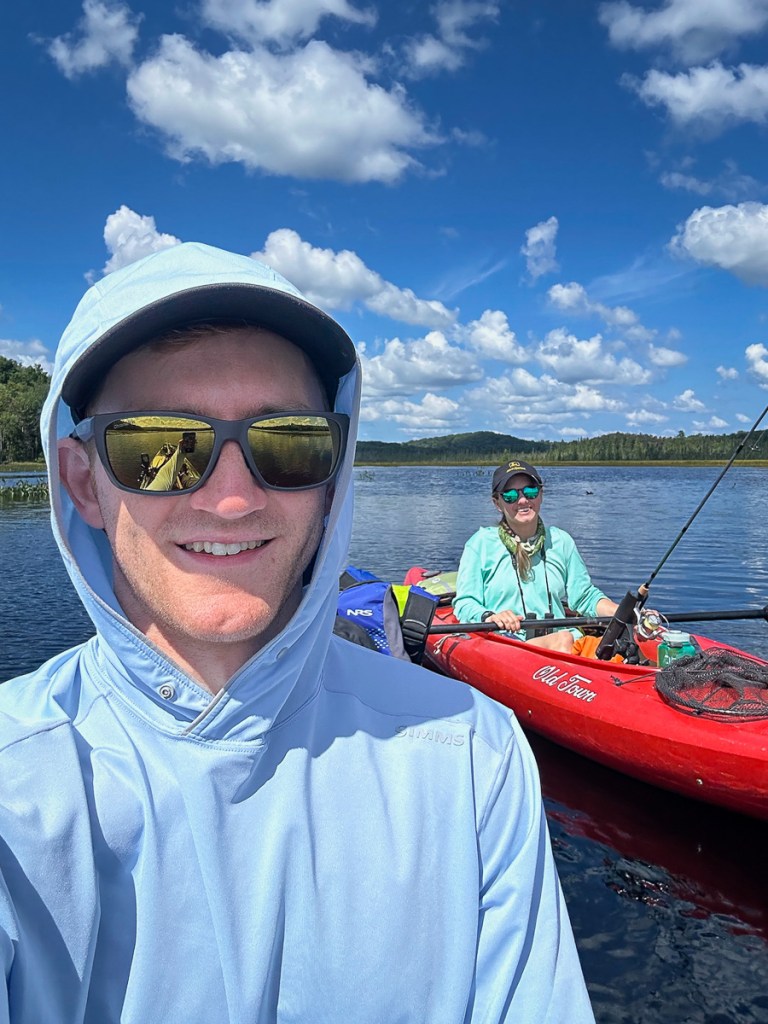
We had another MRE lunch at Rock Island—this time it was beef stew for me and chile for Caitlin. We rested in the shade for a while then hit the water again.
We made our way back to the spot where Caitlin caught her smallmouth the day before, thinking we had a good chance to catch something there again. We arrived after a few minutes and dropped our anchors.
I started casting the drop shot while Caitlin threw a weighted Texas rig with a curly tail worm. I got plenty of nibbles, but nothing seemed interested enough to take a bite.
Then, all of a sudden, I got a massive bite! I tried to set the hook and in a split second the line went light—not good. I reeled in to find that my entire rig had been bitten off.
I was in disbelief. After all morning trying to catch a pike, a big one was now laughing in my face—or at least that’s what it felt like.
I grabbed my other rod—still rigged with my big pike lure from earlier—and kept casting. Nothing. Then I switched to a Texas rigged worm. Nothing.
That’s fishing for ya!
Despite the pike making a fool out of me, it was an incredible day on the water. We headed back to camp soon after to collect firewood and go for a swim.
After the wood was secured, we paddled out to the sand flat near camp and relaxed in the sun until the wind got too cold. It was still relatively early when we got back to camp, so I decided to take a few casts.
I paddled just east of our camp, maybe 15 yards away, and the fish finder lit up! There were rocks on the bottom and plenty of fish on the graph.
I started casting the drop shot and it didn’t take long to get some action. I fished for about 30 minutes and caught two little smallmouth.
Back at camp, it was dinner time. We shared a freeze-dried sweet and sour chicken and I supplemented with a hatch chile mac and cheese. Both were quite good and we were pleasantly full.
We spent the next hour staring at the sky—it was finally clear and we could see the Milky Way along with millions of stars! It got a bit too bright once the moon rose, so we returned to the fire.
On the way back, I almost stepped on a snake!
Caitlin is the snake expert between us and she identified it as a baby ringneck snake—totally harmless. She moved it into the woods so it wouldn’t get crushed.
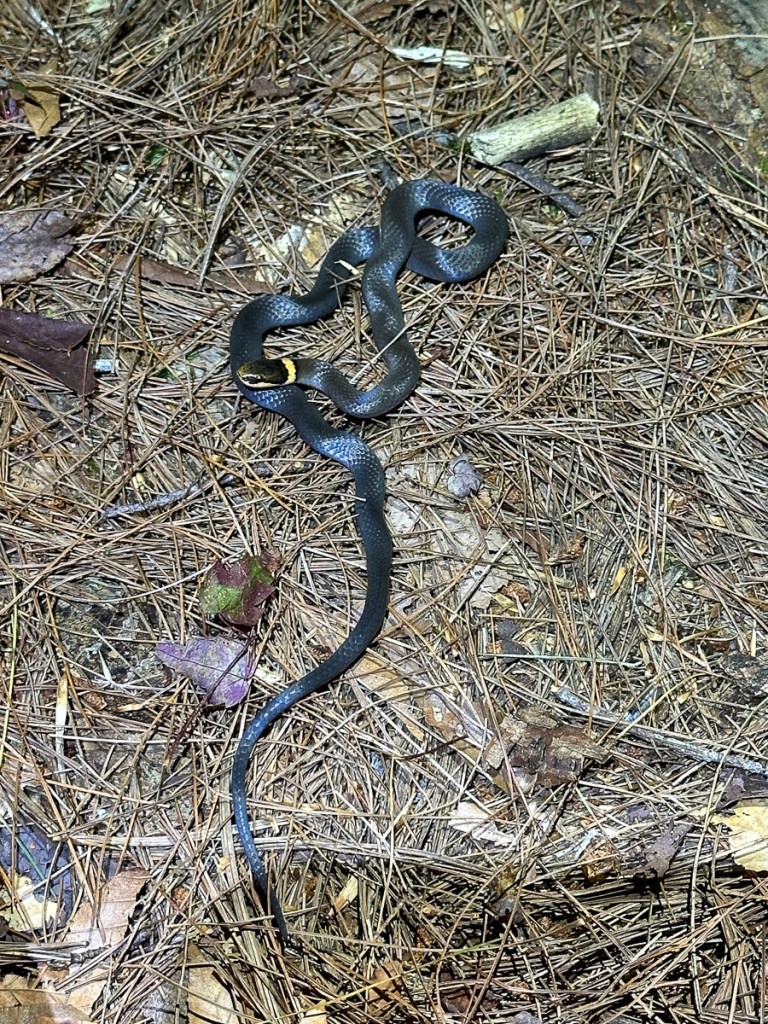
We relaxed for a while back at the fire, filtered some water, put the food away, and hit the tent.
Day 5 – Saturday
This would be our last full day on the lake, and we had an ambitious plan to explore an area we’d never visited.
We hit the water around 9:30 am with everything we would need—fishing gear, MREs, sunscreen, and water—and paddled south across the lake.
The wind was strong and in our faces, so the paddle was slow. Eventually, we made it to a small group of islands that, mercifully, blocked the strong wind.
I started fishing in the narrow channels between the islands while Caitlin explored. We moved around, fishing a few spots, then went ashore on the largest island.

This island is actually a designated campsite and it’s quite large. A few trails criss-cross it and there’s even a “luxury” outhouse complete with a metal roof, windows, and screens! We explored for a while then headed to another island.

The next island was smaller, basically a big pine grove. We pulled up our boats and found a large, sunny rock at the water’s edge that looked like a great spot for lunch. More MREs were on the menu—this time, meatballs in marinara and beef goulash—amazing!
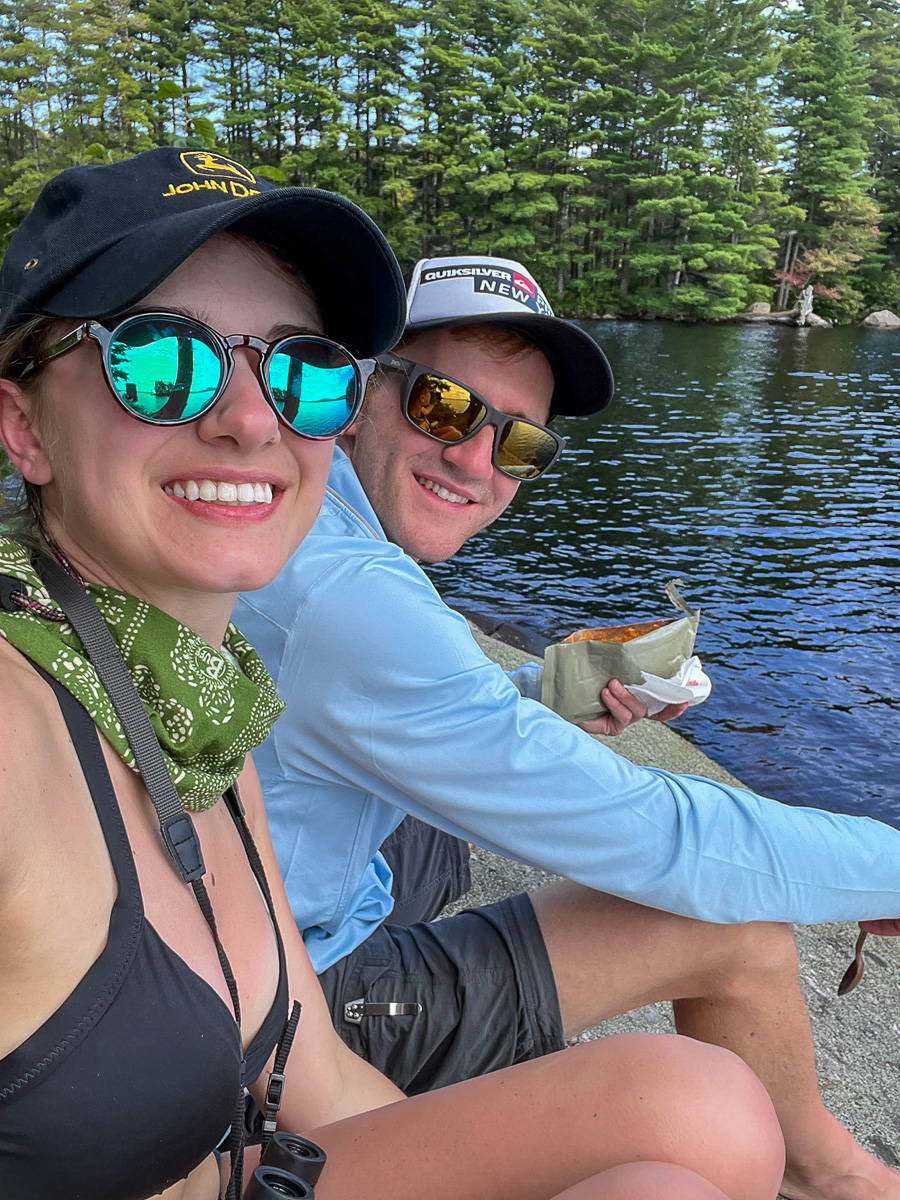
It was an incredible spot to rest, take in the view, and warm ourselves in the sun. There were wild blueberry bushes all around too, and Caitlin picked quite a few for dessert.
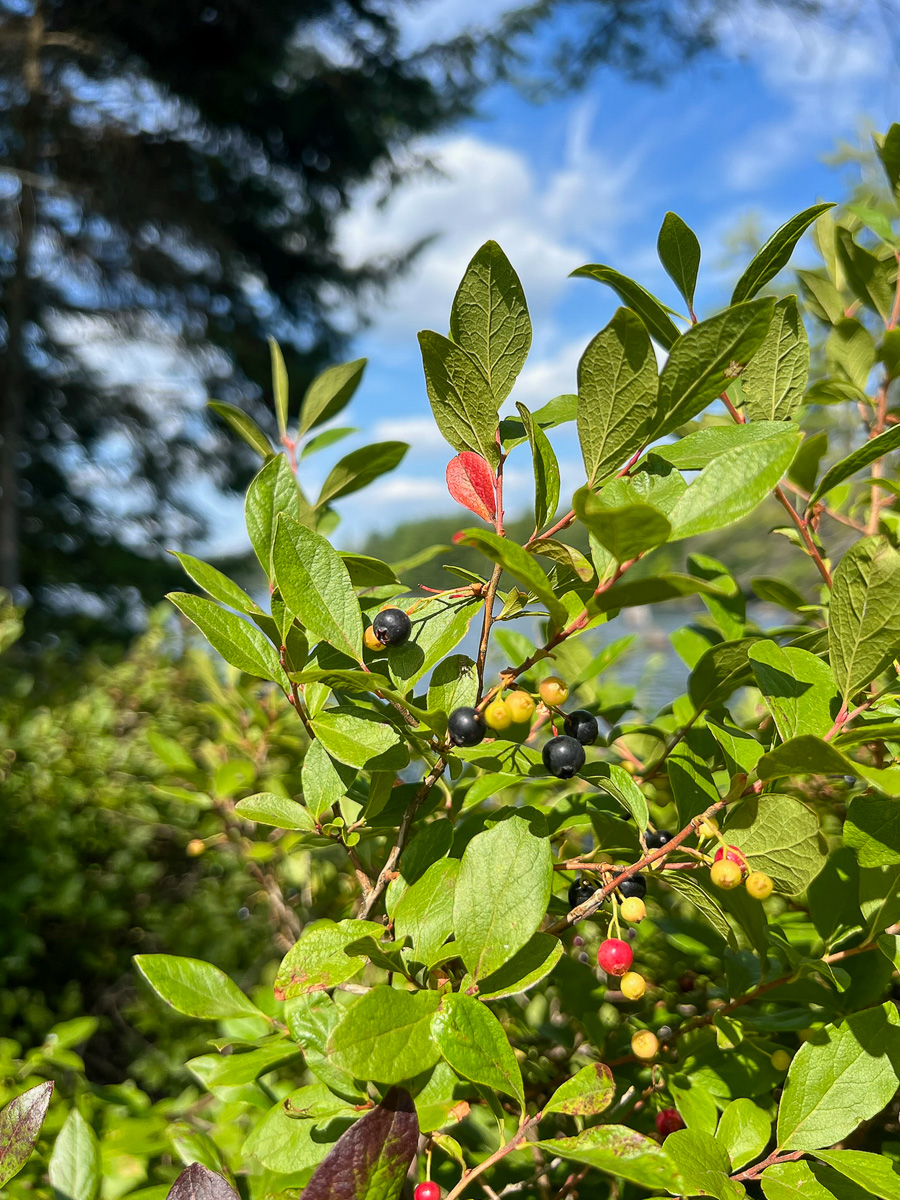
Before leaving the island, we collected smaller, dry wood and stuffed it into the front hatch of my kayak—with our existing stockpile, our wood for the night was secured!
We got back on the water and stopped to fish a deeper area (about 6–10 feet) right between the islands, just offshore from our lunch spot. I tried the drop shot and some crankbaits while Caitlin used her go-to: a weighted Texas rig with a curly tail worm.
I got a few bites but nothing took my bait. Caitlin, on the other hand, hooked a nice largemouth bass after just a few casts! Once again, she was kicking my butt!

15″ Largemouth Bass
Caught by Caitlin on August 24, 2024
Equipment:
- Bass Pro Micro Lite Graphite 6’6″ (medium light power, fast action)
- 8 lb Suffix braid, 8 lb fluoro leader
- 3/0 EWG hook
- Curly tail worm, pumpkinseed (4″)
- 1/4 oz tungsten worm weight
It was a really nice fish. We were especially stoked since this lake is primarily a smallmouth spot—it’s rare to catch largemouth here.
Itching to catch a solid fish, I switched to the same rig as Caitlin and kept casting. We fished a bit longer with no more action, then decided to move on.
We paddled around the islands, explored the nearby inlet, then started slowly making our way back to camp. The wind had died down and the afternoon light was gorgeous, so we took our time.
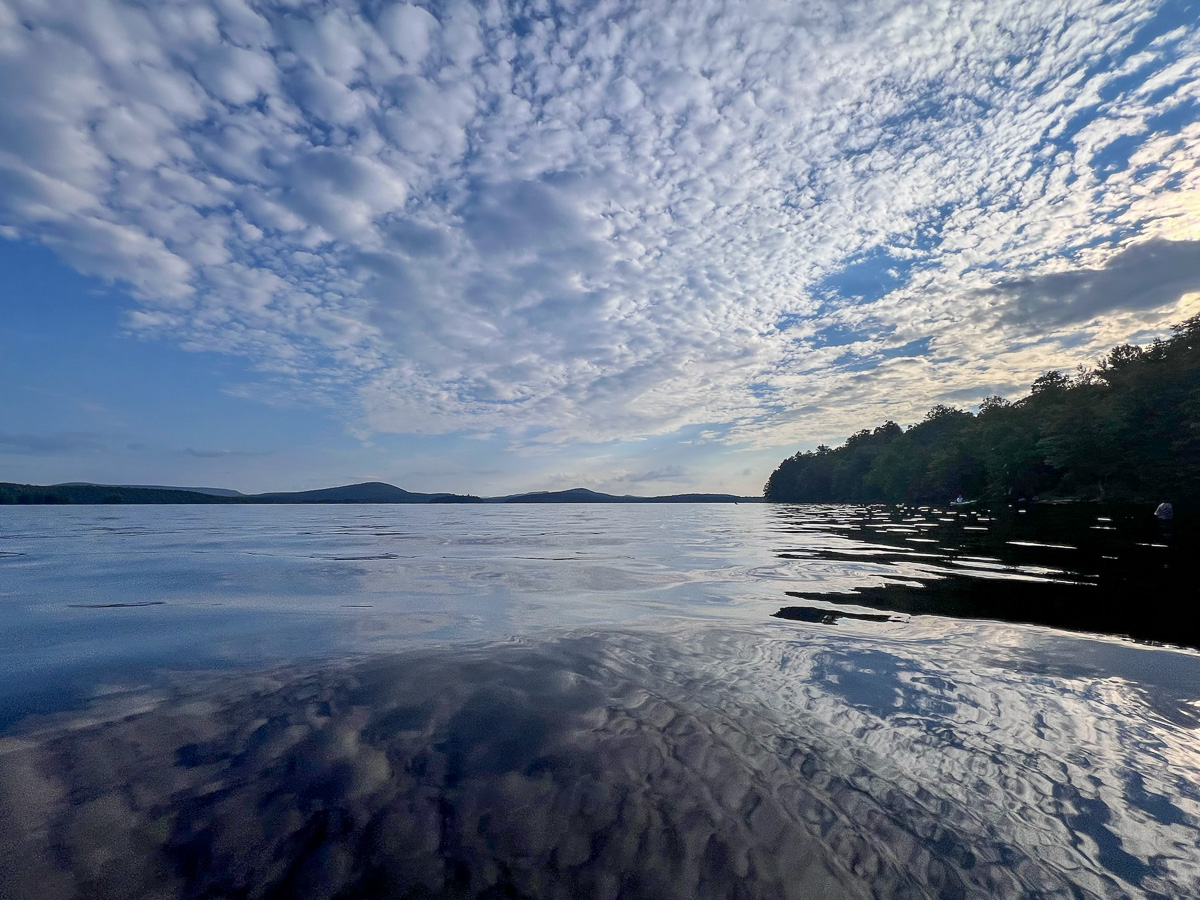
As we neared camp, we stopped to fish a promising area just west of our site—I had noticed this spot on our first day and was eager to try it. My intuition was on point, and we both got bites right away.
After a few casts I finally hooked one, but I reeled in too quickly and didn’t have a good angle on the fish. It jumped right next to my kayak, swam underneath, and broke the line.
I was so bummed! It really stung to lose this one due to my own mistakes, especially after a full day with no catches. That’s just the way it goes sometimes when you’re fishing.
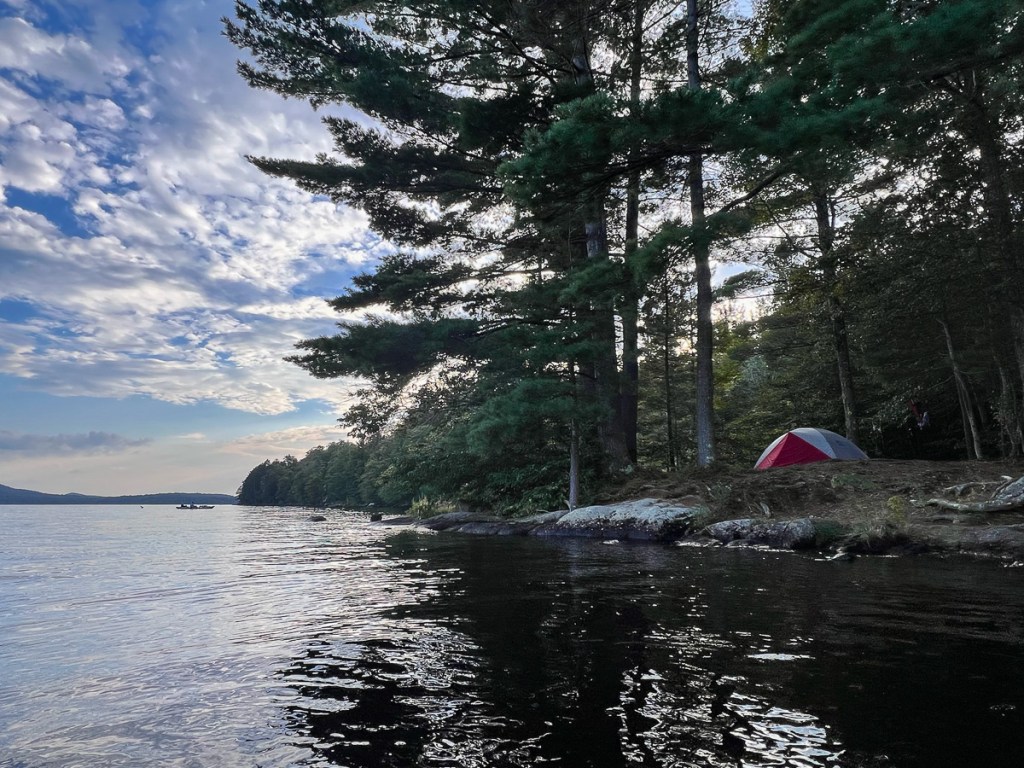
We got back to camp around 6:30 pm, made a fire, and washed off in our private cove. Dinner was another freeze-dried meal—Santa Fe rice and beans! We used tortillas to make burritos out of it.
For dessert, we had the most loaded s’mores we could make: peanut butter spread across the crackers, an Oreo on top, then the classic chocolate and marshmallow. I think I had three of them—I was stuffed!
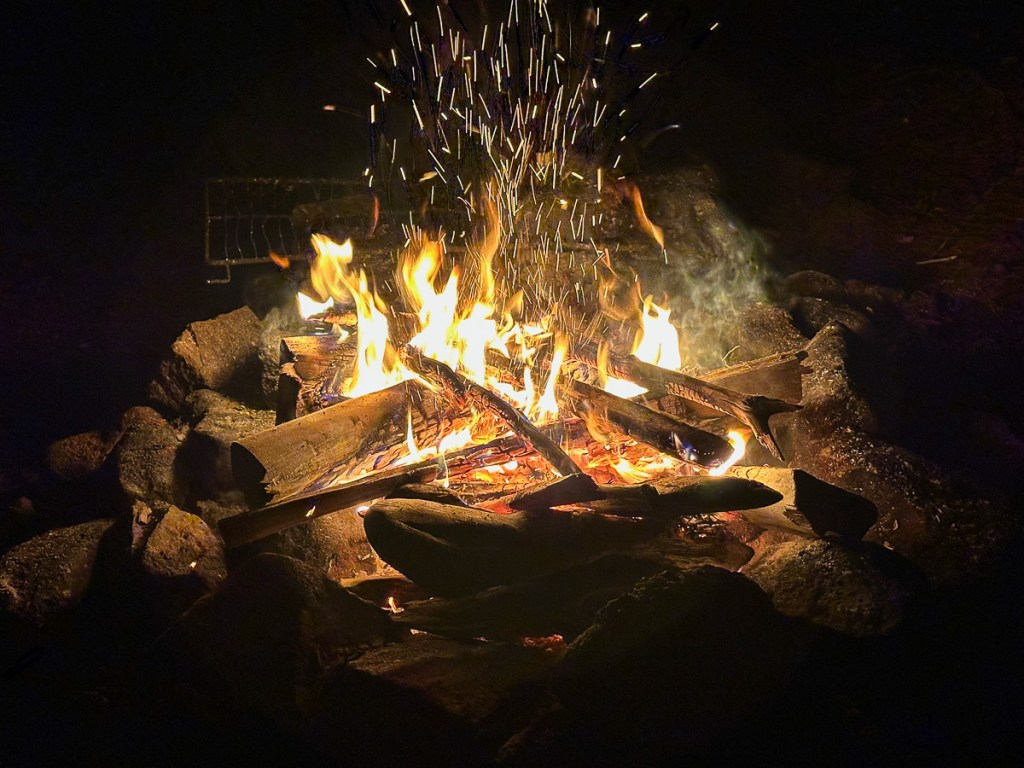
It was our last night on the lake so we built a big fire and stayed up late relaxing, talking and watching the stars. We finally went to bed around 3 am but it was worth it after all the work and survival we endured to start the trip.
Day 6 – Sunday
This was our exit day, so I wanted to do some fishing in the morning. Despite the late night, I dragged myself out of the tent before 8 am and was on the water soon after.
I paddled back to the area west of camp where I had lost the fish the previous evening. I started casting with the drop shot and quickly got one on the line—but it jumped and spit the hook!
I couldn’t believe it happened again, but I didn’t let it get me down. I kept casting and after about 15 minutes I was finally redeemed.
I set the hook and it felt solid—much bigger than the ones I had lost. It put up a decent fight and jumped a few times, but I was careful and it stayed on.
After what felt like an eternity, I finally got the fish into my net. It was a good-sized smallmouth bass, maybe 15 inches long. Words can’t really describe the elation I felt in that moment after all the hard work and lost fish throughout the week.

15″ Smallmouth Bass
Caught by Lukas on August 25, 2024
Equipment:
- Bass Pro Micro Lite Graphite 6’6″ (medium light power, fast action)
- 8 lb Suffix braid, 8 lb fluoro leader
- 3/0 EWG hook
- Z-Man Trick ShotZ (The Deal, 4.2″)
- 1/4 oz tungsten bullet weight
I paused for a second to take it all in, then turned to releasing the fish. It was hooked very deeply in the tongue and the point was actually in the gills.
At first, I wasn’t sure I could free it, but I got the hook out of the gills without much struggle. Then, I cut the line then worked the hook through the tongue by the point, careful to keep the fish in the water periodically.
It was exhausting for both of us, and it took a few minutes to revive the fish. Eventually, it recovered enough strength to swim off.
I went back to camp around 9:30 am to check in with Caitlin. She was packing and told me to keep fishing—so I did! I went back to the same spot and tried a 6-foot diving crankbait.
After a few casts I got a fish on the line, but it spit the hook on a jump. The same thing happened again a few minutes later! On my third attempt I finally landed one—about an 8-inch smallmouth.
These little guys were tricky!
I was back at camp about an hour later and Caitlin was nearly done packing. We decided to fish together before loading up for the trip home, so we paddled just east of camp and started casting.
It was barely a couple minutes before Caitlin had one on the line! I paddled over and found her holding a smallmouth bass about 10 inches long.

10″ Smallmouth Bass
Caught by Caitlin on August 25, 2024
Equipment:
- Bass Pro Micro Lite Graphite 6’6″ (medium light power, fast action)
- 8 lb Suffix braid, 8 lb fluoro leader
- 1/0 EWG hook
- Curly tail worm, translucent yellow (3″)
- 1/4 oz tungsten bullet weight
It was a pretty little fish with vibrant stripes, and it gave her a little gift—somehow, bits of baitfish ended up in the bottom of her boat. It was gross, but we laughed.
From there, we moved farther east to the area where I had success wind drifting on Friday. I took a few drifts through the area using the same drop shot rig as before.
Suddenly, I felt some hard knocks on the line. I tried to set the hook twice, but the fish was cautious.
On my third attempt, it was on!
I took it slow on the reel and kept constant tension on the line, having learned many hard lessons this week. At one point, the fish was barely fighting and I thought I lost it, but as it got close to my kayak it went crazy!
It tried to dive deep, but I wrestled it back to the surface and finally got it in the net. It was a beautiful smallmouth, about 16 inches long—my best of the trip and new personal best smallmouth.

16″ Smallmouth Bass
Caught by Lukas on August 25, 2024
Equipment:
- Bass Pro Micro Lite Graphite 6’6″ (medium light power, fast action)
- 8 lb Suffix braid, 8 lb fluoro leader
- 3/0 EWG hook
- Z-Man Trick ShotZ (The Deal, 4.2″)
- 1/4 oz tungsten bullet weight
After such a great week with so much work, countless incredible moments, many lost fish, and lots of time spent casting, I got my best fish on the last day at the last possible moment.
It was unbelievable!
We headed back to camp after that, both happy that we caught some beautiful fish throughout the week. It gave us the energy we needed for what came next.
We made a quick lunch, then got right into packing mode. It took us about two hours to break down everything and load our kayaks.

We hit the water around 4 pm and we were seriously lucky—the wind was calm and the sun was out! It was an absolutely gorgeous paddle, and we made good time.
We were back at the boat launch around 6 pm and we hit the road about an hour later. After a quick stop for dinner (and caffeine) we were on our way home.
The drive was easy, but it was hard to stay awake. Caitlin helped keep me alert and so did a strong caffeinated drink. I had to splash water on my face a few times, but I made it through.
We finally got home around 4 am, exhausted from one of the best weeks of our lives!

 Alternate Rush
Leave a comment